Selection Guide

A friendly checklist for Martin sprocket and belt drive requests

This guide helps maintenance planners and OEM buyers turn a worn drive, partial part number or field measurement into a clear request for roller chain sprockets, sheaves, bushings or conveyor chain.

1

Start with the chain or belt

For roller chain drives, identify chain pitch, strand count and roller diameter before selecting tooth count. If the request is for a belt drive, collect belt section, current sheave diameters, center distance and target speed ratio. A photo of the existing drive helps, but measurement data is more useful than a picture alone.
2

Measure the shaft interface

Bore diameter, keyway size, set screw position and hub clearance decide whether a standard bore, finished bore, taper-lock bushing or split-taper arrangement makes sense. If a shaft cannot be removed, note the available radial clearance and guard access so a split sprocket can be considered honestly.

3

Add operating context

RPM, service factor, shock load, starts per hour, lubrication and temperature change the practical recommendation. A light packaging conveyor and an aggregate feeder may use similar visible parts but demand different assumptions about wear, access and replacement planning.

4

Prepare the quote packet

A clean packet includes part family, dimensions, application notes, required certificates, target shipment date and whether a distributor should handle the commercial order. This lets a spec engineer or channel partner respond with fewer clarification loops.

What to send with a sample or photo

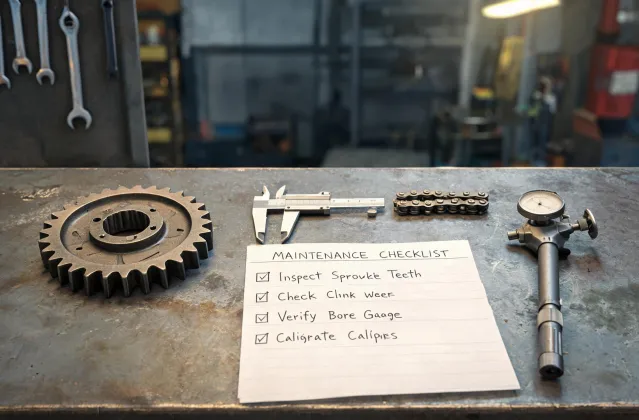
Use a ruler or caliper in the photo, capture both faces of the sprocket, and include the shaft bore. If the chain remains installed, show a short run of chain and the drive center distance. For sheaves, capture belt section markings if they are still legible.

Sprocket measurement checklist

Ready to turn the checklist into a request?

Share what you know. Missing items can be clarified before the quote is finalized.